
Using AI to plan trips has become extremely common, and AI hotel booking is arguably the most mature path for AI commercial applications today.
This year, Radisson Hotel Group teamed up with Accenture and OpenAI to move hotel room displays and direct booking entry points straight into ChatGPT. Accenture helped Radisson build the underlying MCP services and interfaces, launching the official ChatGPT plugin within six weeks.
Users can view rooms on a map, compare prices and check amenities right in the chat window, then jump to Radisson's own channels to complete the booking.
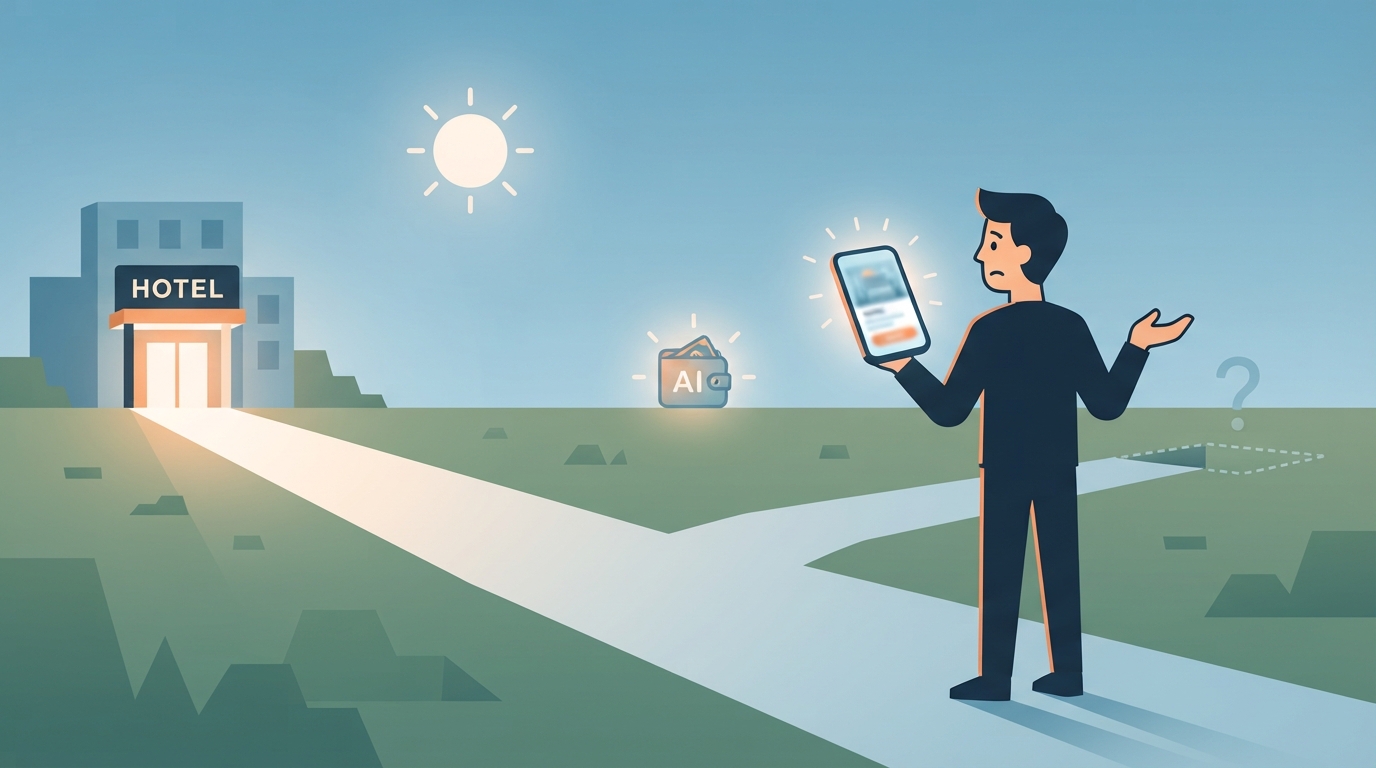
This still falls a bit short — being able to book and pay directly with AI would make it complete.
As ChatGPT recently optimized its invocation logic, users no longer need to manually type the plugin name; mentioning a trip to a relevant city automatically triggers it.
Beyond the plugin's own organic exposure, Radisson also conveniently became one of the first test clients for ChatGPT sponsored ads. They combined plugin displays with paid ads to run full-funnel pre-emptive search interception across multiple markets including Europe.
According to disclosed data, from July to August 2026, the visit-to-booking conversion rate driven by the plugin was roughly 1.5 times that of Radisson's official website organic search channel. Meanwhile, among orders facilitated by sponsored ads, more than half came from indirect conversions following impression exposure, no longer relying solely on a single return click.
This is essentially channel positioning brought about by a shift in entry points. When consumer decisions move from traditional search engines to conversational models, if brands don't proactively intercept traffic at the large model end, control over traffic will sooner or later be taken away by intermediary aggregation platforms.