
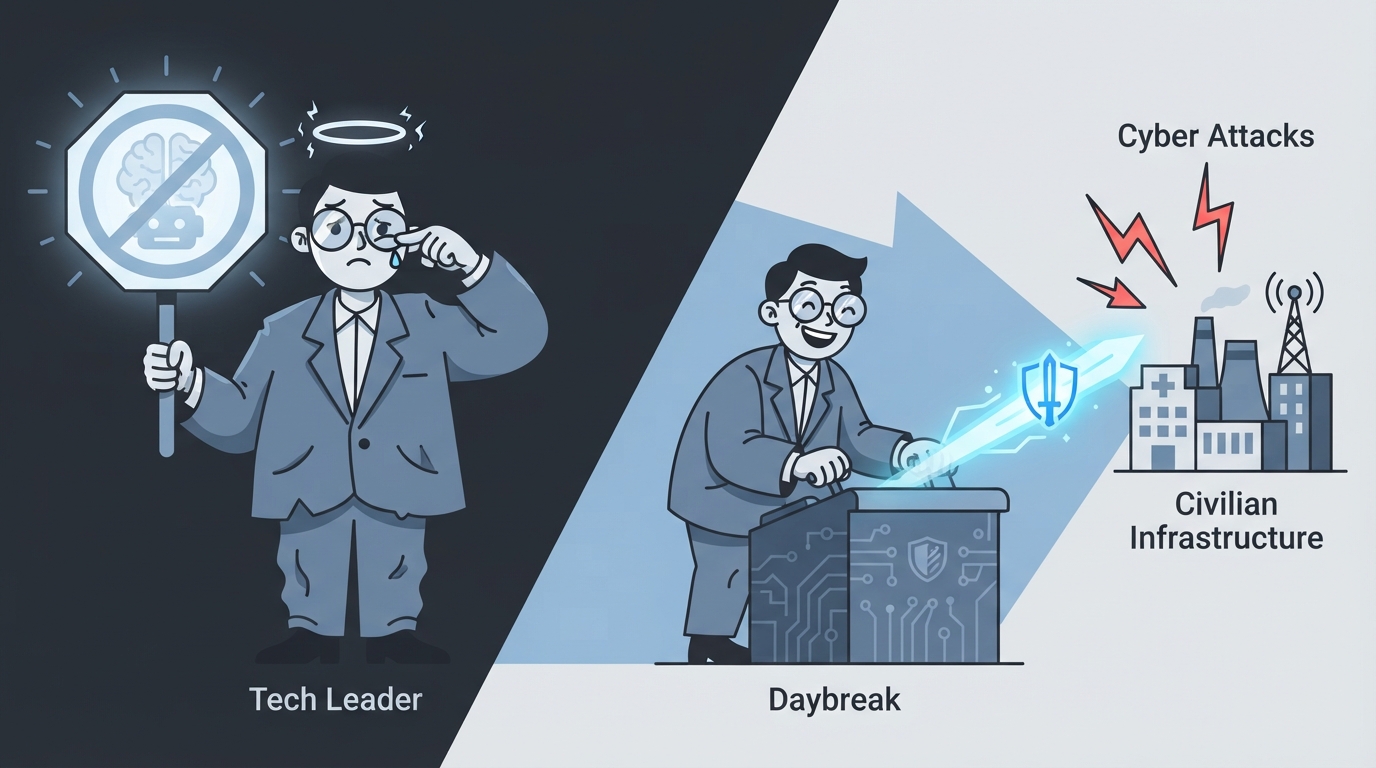
OpenAI has announced that it is opening its "Daybreak" cyber defense project to the Ukrainian government, with a thoroughly respectable official line: helping Ukraine's Ministry of Digital Transformation defend against high-frequency cyberattacks and protect civilian critical infrastructure such as hospitals, energy, and communications.
The most ironic part is that not long ago, Silicon Valley giants were still signing joint letters and appealing all over the world, warning that frontier AI carries the risk of destroying humanity, urging peers to "slow down," and vigorously pushing legislation to establish safety access thresholds.
A bunch of people struck the pose of saviors concerned about humanity's safety, but then turned around and their own models were justifiably plugged into the front lines of the Russia-Ukraine conflict.
They shout "slow down" with their mouths, but their bodies are always so honest.
If one party to the conflict successfully gains access to AI capabilities, how could the other side just sit and wait for death? It will inevitably follow suit. How to follow suit? There are so many open-source models.
You deploy, and I won't be outdone; you advance, and I advance too—everyone advances neck and neck. It would be strange if this could slow down. Unless everyone fights tooth and nail to run ahead of the other side, they'll get beaten later.
Facing AI that routinely intervenes in real combat, no country can step on the brakes; the only response strategy is to bet on AI at greater speed and larger scale.
Silicon Valley's moral appeals—just hear the noise and be done with it.