
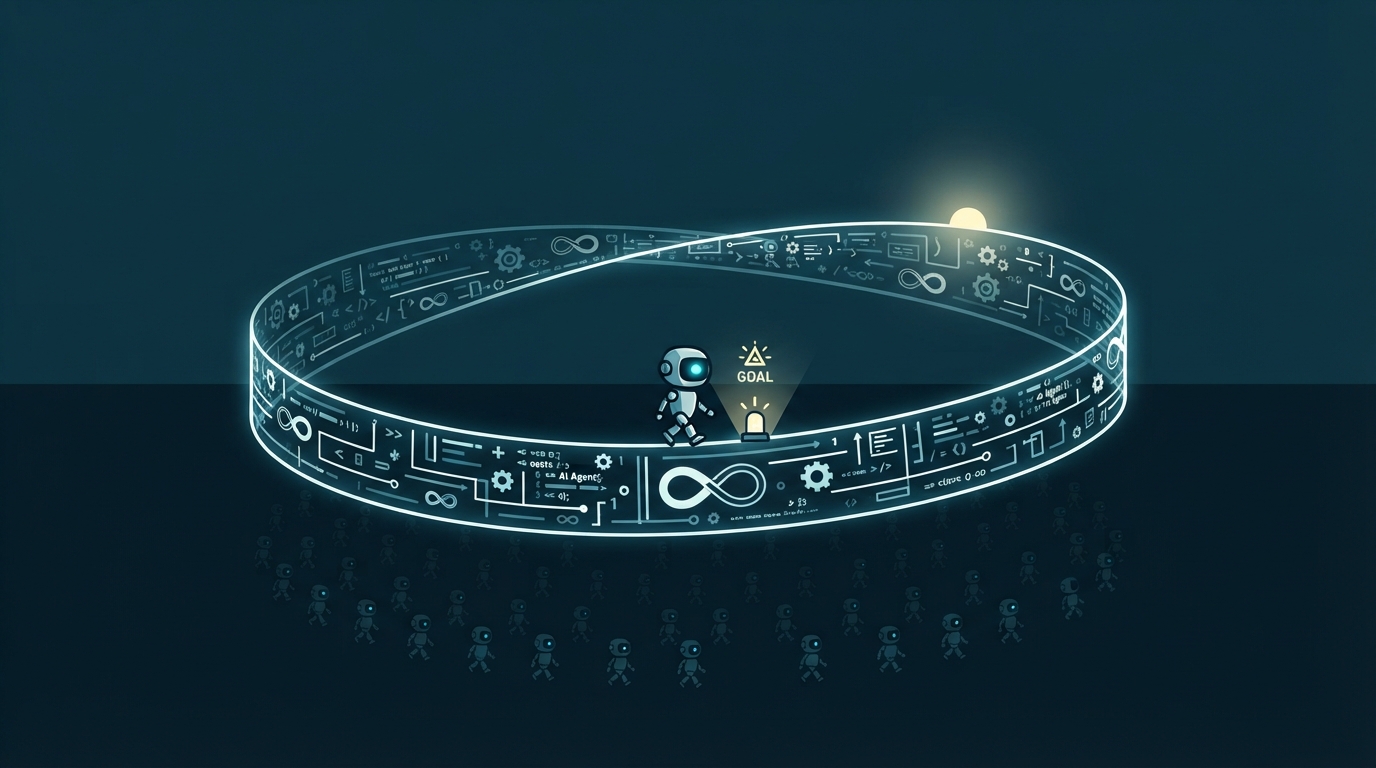
OpenAI recently disclosed a quantitative team called Third Moment Research that can run 10,000 agents autonomously and simultaneously for 36 to 48 hours.
Many teams encounter similar problems when running long tasks: agents forget their goals as they run, or fall into infinite loops.
The first reaction in such cases is usually to think that the model's reasoning ability is insufficient or that the context window is too small, but this quantitative team's investigation reached a completely different conclusion.
Using Codex together with GPT-5.6, they analyzed thousands of historical simulation traces and found that the real reason the agents became dumb was that the external backtesting system was too slow.
The cause was that in their system, having an Agent backtest one year of U.S. equity order data took about 3 hours. After a single Agent started a task, most of its time was actually spent polling and waiting for backtest results; over several hours, the context was directly filled up with polling logs.
Not only did this waste Tokens for nothing, but the original task was diluted in the long context until it was simply ignored, causing the task to fail outright after hours of waiting.
After burning a massive number of Tokens, they realized there was a problem. Then, with Codex, they conducted an in-depth analysis of the backtesting module and identified improvements in caching optimization and memory compaction, compressing a backtest that originally took 3 hours down to 3 to 5 minutes—a direct 97% reduction in time.
Once backtesting efficiency improved, the Agent polling problem was solved.
Official numbers put it at a trillion tokens a day, though it is hard to tell whether they burned that many tokens just finding this bug, or getting the whole setup off the ground. Unless you are a quant team, that kind of burn really stings.